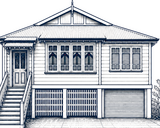
Coorparoo Build-Under Utilities
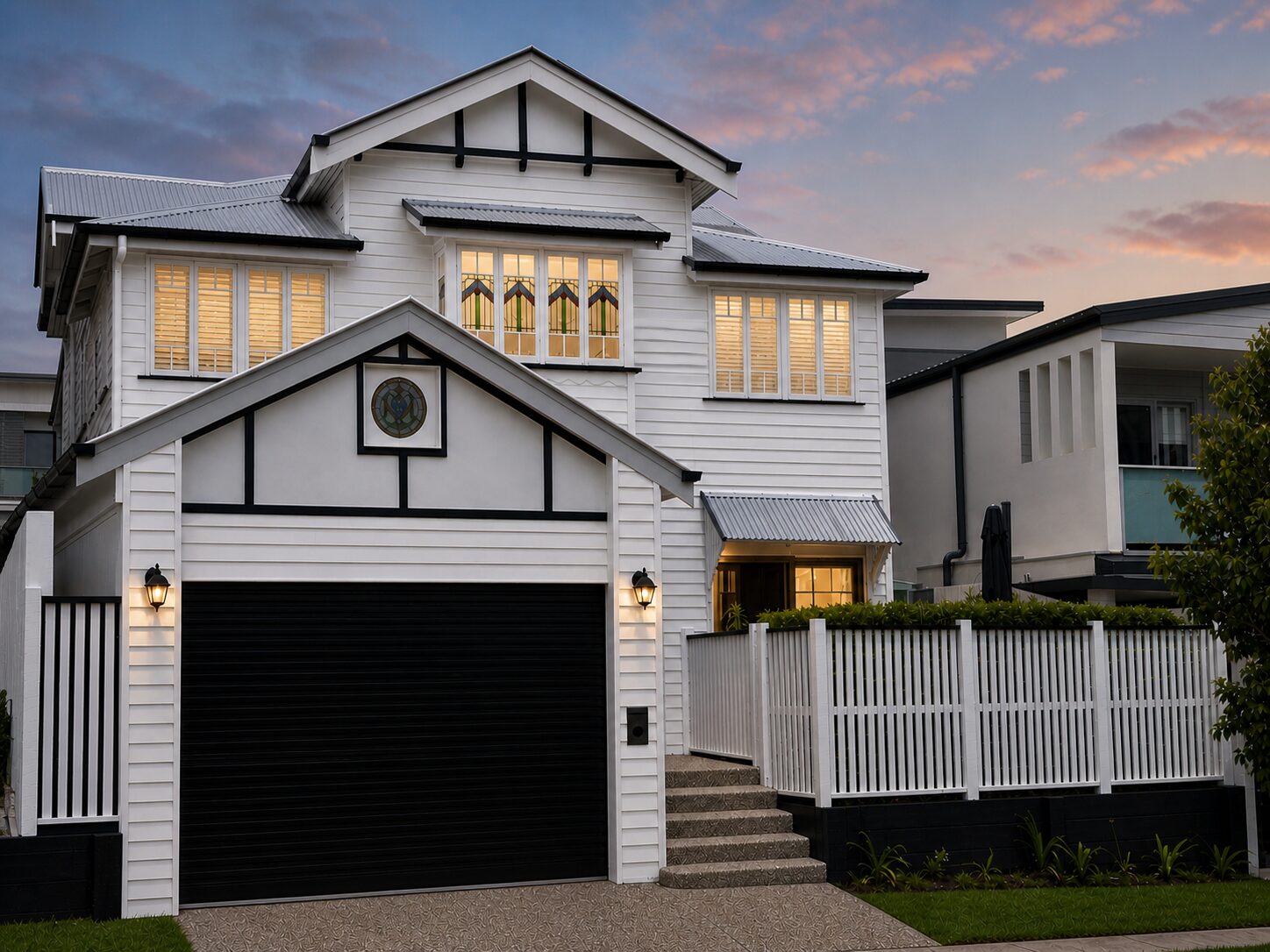
Most advice on raising and building under a Queenslander covers engineers, builders, council approvals and contingency budgets. What gets less attention is what happens at the edges of the block - the utilities, the infrastructure and the decisions made about the public assets around the home.
This is a case study from the Coorparoo build-under. The renovation itself ran to hundreds of thousands of dollars, with tens of thousands more on town planners and council approvals. Alongside that work came two separate processes, one with NBN and one with Energex, that each took time to play out, added cost that had not been budgeted for and shaped the final outcome in ways no one anticipated.
If you are considering a Queenslander raise, build-under or relocation in Brisbane, these are the kinds of issues that rarely make it into renovation guides.
Issue 1: NBN classification for our relocated Queenslander
Sky works in IT, so reliable home internet was non-negotiable for the build. Fibre to the premise (FTTP) was the connection the household needed.
Under the policy at the time, new builds were entitled to FTTP. By any practical definition, the home looked like a new build:
- Brand new subdivided block of land
- House relocated from another property and placed on the new site
- Every utility connection - water, electrical, sewer, stormwater - newly installed
- Every internal service newly plumbed and wired
The only element that was not brand new was the timber structure of the house itself. Everything supporting and servicing it had been installed from scratch.
When the application went in, the property was initially classified as not eligible for new-build FTTP on the basis that the house pre-existed. Sky disagreed with that classification and went through the formal review process.
The review took approximately twelve months. During that period, Sky chose not to sign up for any interim internet service, because connecting via a different technology might have affected FTTP eligibility later. He covered the gap using mobile data tethering, which added several thousand dollars in cost.
The application was eventually approved after escalation to a regional manager. The property received fibre to the premise, the same connection the neighbours on either side got through a more straightforward process. The difference was that their houses were built from scratch on the same subdivided land, while this one was relocated.
Advice for someone in the same position
- If you are relocating a house onto a new site, do not assume any particular NBN classification will apply automatically. Apply early and confirm in writing.
- Document every utility that is newly installed - water, sewer, electrical, stormwater. The full picture of new infrastructure is what makes a property a new build in practice.
- If you have flexibility in timing, check what the effect of an interim connection would be on your FTTP application before signing up to a different technology.
- If the initial classification does not match your situation, use the formal escalation process. In this case, escalation produced an outcome that front-line decisions had not.
Issue 2: Power pole placement near the front of our home
The second issue is still being worked through. It concerns the placement of an Energex power pole and transformer that sits in the road reserve near the property.
An aged double pole and transformer had stood in the area for around 70 years. As part of nearby development, Energex needed to replace the original construction with a single larger pole to carry the existing transformer. Initial communication indicated the new pole would sit on the corner between the property and the neighbouring development.
Several developments have followed over the past several years:
- The pole was first installed in a temporary position where the kerb and gutter were built around its base.
- Energex has stated publicly that when their crews began excavation at the originally planned position, they encountered large metal water mains and rock within the designated electricity alignment, which forced them to place the pole in its current location.
- Their stated position is that, to avoid existing underground services and rock, the new permanent pole will need to go approximately where the historical double pole structure was, which sits closer to the front of the home than the originally indicated location.
Sky has engaged through several channels: community petitions, proposals for alternative outcomes (such as crosswalks and traffic calming on a busy section of road near a park), contact with the local member and discussions with town planners. The decision involves multiple stakeholders, and different sources have given different views on where final authority sits.
Sky shared this story on ABC Radio Brisbane. The segment is available here - [link to be added].
Advice for someone in the same position
- Treat any verbal indications about utility asset placement as preliminary. Where placement matters to you, ask for written confirmation and understand what conditions might cause it to change.
- Front-line staff are not always the final decision-makers. Decisions can shift as engineering investigations progress and new information about underground services emerges.
- The authority question matters. Find out early, through your council’s planning team and the utility’s own published guidance, who has statutory authority for asset placement in your area.
- Engage your local member early if you are concerned about an outcome. They can help bring the right people to the table.
- Understand that infrastructure in the road reserve can affect resale. Pole and transformer placement near the front of a home is not value-neutral.
- Document everything: dates, names, reference numbers and photos. If a community case is needed later, the paper trail is what carries it.
The bigger pattern: infrastructure decisions you don’t control
Both of these processes have a similar shape:
- A homeowner makes a major financial commitment on the basis of a reasonable assumption about utility services or asset placement.
- The utility, working within its own constraints - engineering realities, classification policies, underground services - arrives at an outcome that differs from that assumption.
- The homeowner then has to work through a formal process to either accept the outcome or seek to change it.
These are rarely disputes about who is right. More often they turn on how much weight is given to factors the homeowner can see (the view, the value, the lived experience of the home) against factors the utility prioritises (cost, engineering constraints, statutory obligations, network design).
When you are costing out a Queenslander raise or build-under, most budgeting tools, calculators and checklists focus on what happens between the boundaries of your block. But your home does not exist in isolation. The view from your front window, the speed of your internet and the placement of utility infrastructure on the street outside shape the value and liveability of your home as much as the engineering you invest in.
Practical takeaways for Queenslander renovators
If you are early in your project, build the following into your readiness work:
-
Connection audit. For every utility - water, sewer, stormwater, electrical, NBN - confirm in writing what classification your property falls under and what services you are entitled to. Do not rely on verbal assurances.
-
Easement and asset map. Pull a Dial Before You Dig report and review available council and utility network information. Understand where existing assets are, where they may be moved to and what is underground that could affect future placement decisions.
-
Local member relationship. Identify your state and federal members early. You might never need them. If you do, you want the relationship to pre-date the issue.
-
Council and utility authority. Before any disagreement, find out who has statutory authority for the kinds of decisions that could affect you. “The other one” from both sides is not a useful answer when you are in the middle of a process.
-
Document from day one. Every conversation, every commitment, every reference number and every promise. The renovation paper trail is well understood. The utility and infrastructure paper trail is just as important, so keep it with the same care.
These two experiences are part of why this site exists. The Coorparoo build-under showed how much practical, decision-grade information is missing from the standard Queenslander renovation conversation. Queenslander Built aims to fill that gap with real numbers, real timelines and the lessons behind them.
If you are working on a Queenslander raise, build-under or relocation and want a structured way to capture costs, decisions and risks, our Budget Toolkit and Before You Raise: Readiness Pack are the practical place to start.
This article describes our personal experience and is provided for general information only. It is not legal, financial or professional advice and does not represent the position of NBN Co, Energex, Brisbane City Council or any other organisation mentioned. Policies, processes and classifications change over time. Confirm current requirements directly with the relevant provider before making decisions about your own project.
Newsletter
Follow the build
One documented Coorparoo project - the costs, the approvals, the calls we would reverse. Lessons that translate, straight to your inbox.