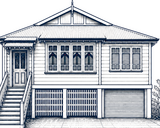
What 'Pre-War' Means in Brisbane
The term “pre-war” appears constantly in Brisbane property listings and planning documents that describe older houses. It carries more practical weight than most buyers expect, so this article sets out what it means and why it matters.
What “pre-war” means
In Brisbane property, “pre-war” typically refers to houses built before 1946, the end of World War II. The term is used both informally and in planning documents.
Brisbane City Council’s planning scheme uses “pre-1947” as the specific cut-off for its pre-1947 building character overlay. Properties with houses built before 1947 may be in this overlay, which affects what changes can be made to the building.
In common usage, “pre-war” and “pre-1947” are used interchangeably in the Brisbane property market.
Why the date matters for renovation planning
Brisbane City Plan overlays. BCC uses pre-1947 construction as one of the criteria for applying the character overlay. If your house was built before 1947 and is in a designated area, there may be additional requirements for development approval relating to the appearance and character of the building.
Asbestos risk. Houses built before 1990 may contain asbestos-containing materials. Houses built before 1960 are particularly likely to have older asbestos products (including some that are more friable and higher risk) in external cladding, floor sheeting and ceilings.
Wiring and plumbing age. Pre-war houses may have electrical wiring from the 1930s-1940s, which is well past its safe working life. Lead pipes were also common in older Brisbane plumbing.
Structural characteristics. Pre-war Queenslanders were built with different structural approaches to post-war homes: fully flexible timber frames that move with seasonal moisture changes, designed to breathe rather than be fully sealed. Understanding this affects how you renovate.
How to find out when your Queenslander was built
- BCC’s property information portal (ePlanning) may show building records
- The Queensland State Archives holds historical survey plans and some building records
- A Search Results Certificate (formerly known as an LGA search) can show existing approvals on the property
- The style and construction methods can help approximate the date, and a building historian or heritage consultant can advise
Pre-war Queenslanders and the character overlay
If your Queenslander was built before 1947 and is in a character overlay area, the following typically applies:
- Retention of the existing character is encouraged and, in some cases, required
- Street-facing alterations must be sympathetic to the character
- Demolition of the pre-1947 structure typically requires impact assessment
- Raising and extending behind the existing house line is generally more acceptable than significant alterations to the street facade
Always confirm the specific overlay requirements for your property with BCC or a town planner.
Pre-war Queenslanders: FAQ
What years are considered pre-war in Brisbane?
Generally, pre-war refers to houses built before 1946 (end of World War II). BCC's planning scheme uses 1947 as the specific cut-off date for character overlay purposes. The terms are used interchangeably in the property market.
Does my house being pre-war affect what I can renovate?
It may: if your property is in a character or pre-1947 overlay, there are additional planning requirements for changes to the building. The overlay does not prevent renovation, but it shapes how renovation must be done. Check Brisbane City Plan 2014 for your property's overlay status.
How do I find out when my Brisbane house was built?
BCC's property information portal, Queensland State Archives records, council rate records and the physical construction methods can all help. A building historian or the RAIA (now Australian Institute of Architects) can also advise on dating by construction style.
Newsletter
Follow the build
One documented Coorparoo project - the costs, the approvals, the calls we would reverse. Lessons that translate, straight to your inbox.