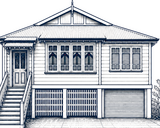
Council Approval to Raise Your House
Short answer - yes, in most cases. Raising a Queenslander in Brisbane typically requires a development approval (DA) from BCC, as well as a building permit from a private certifier. This guide explains why and what the process involves.
Process current as at 2026. Council processing times, application categories and overlay rules may have changed since this article was last reviewed. Confirm current requirements directly with BCC and your certifier before relying on any process detail. Where this article describes “what we did”, that experience is from our Coorparoo project.
Why council approval is usually required
Raising a Queenslander changes the building envelope - the height, the footprint relationship to boundaries and in many cases the character of the property. These changes are assessed by BCC under the Brisbane City Plan 2014.
Specifically, a Queenslander raise typically triggers a DA assessment because:
- It changes the height of an existing structure
- It changes the height-to-boundary relationships
- In character overlay areas, the change must be assessed for compatibility with the surrounding neighbourhood character
Development approval vs building permit
These are two different approvals from two different bodies:
Development Approval (DA) - BCC Assesses the planning and design merits of the proposal. Issued by BCC. Required when the works change the use, building envelope or character of the property in a way that requires assessment. Typically required for a Queenslander raise.
Building Permit - Private Building Certifier Approves the technical construction aspects. Issued by a private certifier (not council). Required for all building work. Always required for a Queenslander raise.
Both approvals are usually required for a Queenslander raise. They run concurrently, but must both be in place before works begin.
When might a DA not be required?
A small number of scenarios may be code-assessable (no formal DA required) or exempt, depending on your specific property, overlay and proposed scope. Examples might include:
- A very minor raise (a few hundred millimetres) that does not change height-to-boundary compliance
- Properties in zones or overlays where the specific works are explicitly listed as exempt
Do not assume your raise is DA-exempt without confirming with BCC or a town planner. The consequences of commencing works without a required approval are serious.
The character overlay factor
If your property is in a character or pre-1947 overlay, the DA requirements are more specific. The overlay requires that new development be sympathetic to the character of the area. A Queenslander raise is generally viewed positively in a character overlay (you are retaining the existing building), but the new ground floor must meet character requirements for materials and street-facing design.
How to confirm what’s required for your property
- Search Brisbane City Plan 2014 online (cityplan.brisbane.qld.gov.au) for your property
- Identify any overlays applicable to your property
- Review the zone code and overlay provisions for the proposed works
- If uncertain, contact BCC’s development enquiry service or engage a town planner
A town planner can recommend a pre-lodgement meeting with BCC. That meeting is often worth the cost, because it tells you what the council will assess before you spend money on detailed plans.
Brisbane council approval for Queenslander raise: FAQ
Do I always need a DA from BCC to raise a Queenslander?
In most cases, yes - a DA is required for a Queenslander raise as it changes the building envelope and height. Some minor works may be exempt or code-assessable, but always confirm for your specific property before committing to a timeline.
How long does a DA take for a Queenslander raise?
For a Code Assessable DA (straightforward property, no heritage complications), allow 4-10 weeks. For Impact Assessable applications or properties with complex overlay conditions, the timeline can be much longer. Budget 3-6 months from deciding to raise to being able to start on site.
Can I apply for the DA myself or do I need a consultant?
You can apply yourself, but most homeowners engage a building designer or town planner to prepare the documentation. The plans must meet BCC's requirements for DA lodgement - a professional who regularly works with BCC will prepare documents that are less likely to require additional information requests.
What is the difference between code assessable and impact assessable?
Code assessable applications are assessed against the rules in the planning scheme without neighbour notification or public submission. Impact assessable applications require public notification, allowing neighbouring owners to make submissions. A raise in a character overlay is often code assessable if it meets the overlay requirements, but confirm with BCC.
Newsletter
Follow the build
One documented Coorparoo project - the costs, the approvals, the calls we would reverse. Lessons that translate, straight to your inbox.