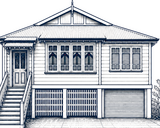
Was Your Build-Under Legally Approved?
Buying a raised Queenslander with an existing build-under has specific due diligence requirements. Unpermitted or incomplete build-under work is more common than buyers realise. Here is how to check.
Why it matters
An unpermitted build-under is a legal problem, and at settlement it becomes the buyer’s problem. The consequences fall into several areas.
- Inability to insure the structure adequately
- Problems with buyer finance (lenders may refuse to lend on unapproved structures)
- Obligation to obtain retrospective approval (expensive and sometimes impossible)
- Inability to legally occupy the ground floor spaces
- Potential requirement to demolish non-compliant work
The key document: Form 21 (Occupancy Certificate)
The most important document to request is the Form 21: the certificate of classification (or occupancy certificate) issued by the private building certifier on completion of the works.
The Form 21 confirms that the build-under was completed in accordance with approved plans and the Building Code of Australia. Without it, the ground floor spaces cannot be legally occupied.
Always ask for the Form 21 before exchanging contracts.
What to request from the vendor
Ask the vendor for the full documentation trail before you commit to the purchase.
- Copy of the development approval (DA) from Brisbane City Council for the raise/build-under
- Copy of the building permit issued by the private certifier
- Copy of the Form 21 (Occupancy Certificate)
- Any engineering documentation (structural engineer’s design sign-off)
- Trade compliance certificates (electrical, plumbing)
- Any council condition compliance documentation
If any of these are unavailable, that is a red flag requiring investigation before exchange.
Check council records
Search Brisbane City Council’s ePlanning portal for the property address. The portal should show the following records.
- Approved development applications
- Building approvals
- Any outstanding conditions or enforcement actions
If no build-under approval appears in council records, but the ground floor is clearly built, that is a significant issue.
Physical clues of unpermitted work
A building inspector experienced with Queenslanders can identify signs of unpermitted or non-compliant work:
- Ceiling height below the minimum for habitable rooms (typically 2.4 m)
- Egress windows that don’t meet minimum size requirements
- Missing or incorrectly installed smoke alarms
- Inadequate ventilation in habitable rooms
- Non-compliant bathroom or laundry wet areas
- Electrical work that appears DIY or doesn’t match a licensed installation
What to do if documentation is missing
If the vendor cannot produce the Form 21 or building approvals, your options are:
- Request a price reduction sufficient to cover the cost of rectification or retrospective approval
- Condition the contract on the vendor obtaining the necessary documentation
- Walk away
Retrospective approval is possible in some cases, but is not guaranteed, can be expensive and may require work to be opened up or rectified.
Legal build-under checks: FAQ
What is the most important document to check when buying a raised Queenslander?
The Form 21 (Occupancy Certificate) issued by the private building certifier. This confirms the build-under was legally completed and can be lawfully occupied. Without it, the ground floor spaces are technically not approved for habitation.
What if the vendor says the council approved it verbally?
Verbal approvals have no legal standing. You need the written development approval, building permit and Form 21. If the vendor cannot produce these documents, treat the build-under as unapproved until you can verify otherwise.
Can I get retrospective approval for an unapproved build-under?
Sometimes. Retrospective building approval requires the certifier to inspect the work and confirm it meets current building code requirements. If the work is compliant, approval may be possible. If not, rectification may be required. The process is expensive and the outcome is not guaranteed.
Newsletter
Follow the build
One documented Coorparoo project - the costs, the approvals, the calls we would reverse. Lessons that translate, straight to your inbox.