Should I Buy a Queenslander?
Queenslanders are one of Brisbane’s most loved house types, and one of the most work-intensive to own. Before you commit to buying one, here is an honest picture of what you are taking on.
What makes a Queenslander different
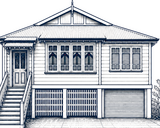
A Queenslander is a traditional elevated timber frame house with a corrugated metal roof, VJ or chamferboard external cladding, wide verandahs, high ceilings and a raised subfloor. Most were built between the 1880s and 1940s. The best ones have been well maintained, sensitively renovated and properly restumped. Many have not.
The elevated subfloor is both the main opportunity and the main risk of owning one. It shapes the house in three ways.
- Ventilation and pest management in Brisbane’s subtropical climate
- The potential to raise the house and build a new ground floor underneath
- A source of problems including moisture, termites, deteriorating stumps and subfloor boarding
The renovation potential
A well-located Brisbane Queenslander on a decent block can be transformed through a raise and build-under. Adding a full ground floor can add 50-100% more living area to the footprint and lift the home’s value.
The Coorparoo project added 112.5 m² of enclosed habitable living area to the existing footprint, with a newly built carport, carport loft and rear patio and the fully restored rear balcony. At Brisbane property values, the value add from that renovation exceeded the cost, though the financial outcome depends heavily on the purchase price, the renovation cost and timing.
What buyers often miss
Asbestos. Most pre-1990 Brisbane homes contain asbestos in some form, whether floor sheeting, external cladding, eaves, fascias or ceilings. It is not automatically a deal-breaker, but it adds cost to any renovation that disturbs these materials.
Subfloor condition. Inspect the subfloor carefully. Timber stumps, bearers and joists in Brisbane’s reactive clay soil are subject to moisture, termite attack and movement. The cost of restumping or raising ranged from around $15,000 (restump only) to $300,000+ (full raise and build-under) on Brisbane projects. Current rates will be higher; get current quotes.
Electrical and plumbing age. Older wiring (pre-1970s) may need full replacement. Old copper or lead pipes may need replacement. Budget for this before you renovate.
Character overlay restrictions. If the property is in a character or pre-1947 overlay, what you can do to the street-facing elements is restricted. A VJ board exterior that needs full replacement may need to be replicated in timber to comply.
Council approval timeline. Any significant renovation will require a development approval and building permit. Allow 3-9 months from when you submit the DA to when you can start on site.
Questions to ask before you buy
- What is the stump type and condition? (Timber or concrete? When last replaced?)
- Is there any active or past termite activity?
- Has any asbestos been identified and where?
- Is the property in a character or heritage overlay?
- What is the flood or waterway overlay status?
- What development approval history does the property have?
- Has the house been relocated? (Relocated Queenslanders can have complex structural histories)
- What is the practical ceiling height if you raise to a standard 2.4 m? Would you want to go higher?
Buying a Queenslander: FAQ
Is it worth buying a Queenslander in Brisbane?
For the right buyer, yes, especially if you understand the renovation potential, have the budget for maintenance or improvement and are prepared for the complexity. For a buyer who wants a low-maintenance home with no surprises, a newer property may be more appropriate.
How much should I budget for renovating a Queenslander?
It depends entirely on the scope. On Brisbane projects, a simple cosmetic renovation was in the $50,000-$100,000 range and a full raise and build-under, like our Coorparoo project, was $250,000-$450,000+. Get current quotes for your specific scope rather than relying on these historical ranges.
Do all Queenslanders have asbestos?
Not all, but most pre-1990 Brisbane homes contain asbestos in some location. Common locations are external eaves and fascias, floor sheeting (particularly in wet areas), old ceilings and some internal wall linings. An asbestos assessment will tell you what is present and where.
Newsletter
Follow the build
One documented Coorparoo project - the costs, the approvals, the calls we would reverse. Lessons that translate, straight to your inbox.