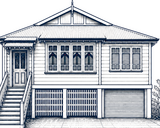
When Was Your Queenslander Built?
Knowing when your Queenslander was built affects planning overlays, heritage significance and renovation decisions, so it is worth pinning down. Council records, state archives and physical clues in the building itself can each help you date it, and combining several sources gives the most reliable answer.
Start with the council
Brisbane City Council holds building approval records going back many decades, so it is the first place to check. Search ePlanning, the council’s online planning portal, for your property address, and you may find approval records that include a construction date.
Not all historical records are fully digitised, particularly pre-1950 records. If the online search doesn’t return results, contact BCC directly to request historical property information.
Queensland State Archives
The Queensland State Archives holds survey plans, lands records and some building documentation for Brisbane properties. You can search their catalogue online at Archives Search. Relevant record types include:
- Survey plans showing development of the area at different dates
- Crown Grant records
- Subdivision plans that can narrow down when the block was created (and therefore when houses could first have been built)
Aerial photography
You can access historical aerial photography of Brisbane suburbs from several sources.
- Queensland Globe (the Queensland Government mapping portal), which includes aerial photography from the 1940s onwards
- National Library of Australia archives
- BCC historical imagery
Comparing different years of aerial photography lets you see when structures first appear on a block, which brackets the earliest possible build date for the house.
Council rate records
Historical council rate records sometimes include construction dates or building ages. These are held by BCC and may be accessible through a formal records request.
Ask your neighbours
Long-term neighbours in older Brisbane suburbs are often a surprisingly rich source of local history. They may know the history of your block, when the house was built, who built it and whether it has been relocated.
Physical clues in the building itself
A building historian or heritage consultant can estimate a construction date from architectural style and construction methods:
- Weatherboard type (chamfer board vs VJ board vs early vs late patterns)
- Window style and hardware
- Internal joinery and hardware
- Roof profile and material
- Subfloor construction methods and materials
- Timber species used in the frame
Older Queenslanders typically used Queensland hardwood species such as tallowwood, blackbutt and spotted gum for framing and flooring. The specific species and sawing method can help date the structure.
The pre-1947 character overlay
For planning purposes, the date that matters most is usually whether the house was built before or after 1947. If your research is mainly for council approval rather than heritage interest, the council’s own records, whether through ePlanning or a formal request, are the most reliable source.
Researching your Queenslander's age: FAQ
Does the construction date appear on my title or contract of sale?
Not usually. The contract of sale may describe the property as a 'pre-war Queenslander' but rarely includes a specific construction date. You need to research council records or archives for this.
How accurate are the dates in council records?
Council records are generally reliable for properties with existing approval documentation. For very old properties (pre-1930s), records may be incomplete or missing. Combining multiple sources gives the most reliable result.
Do I need to know the exact construction date for a development application?
Usually not. Brisbane City Plan uses 1947 as the cut-off for the pre-1947 character overlay. For DA purposes, the council will assess whether a property appears to have been built before 1947 based on available evidence. If the date is uncertain, a heritage consultant's report can provide a professional assessment.
Newsletter
Follow the build
One documented Coorparoo project - the costs, the approvals, the calls we would reverse. Lessons that translate, straight to your inbox.