How to Lay Vinyl Plank Flooring Over a Concrete Slab
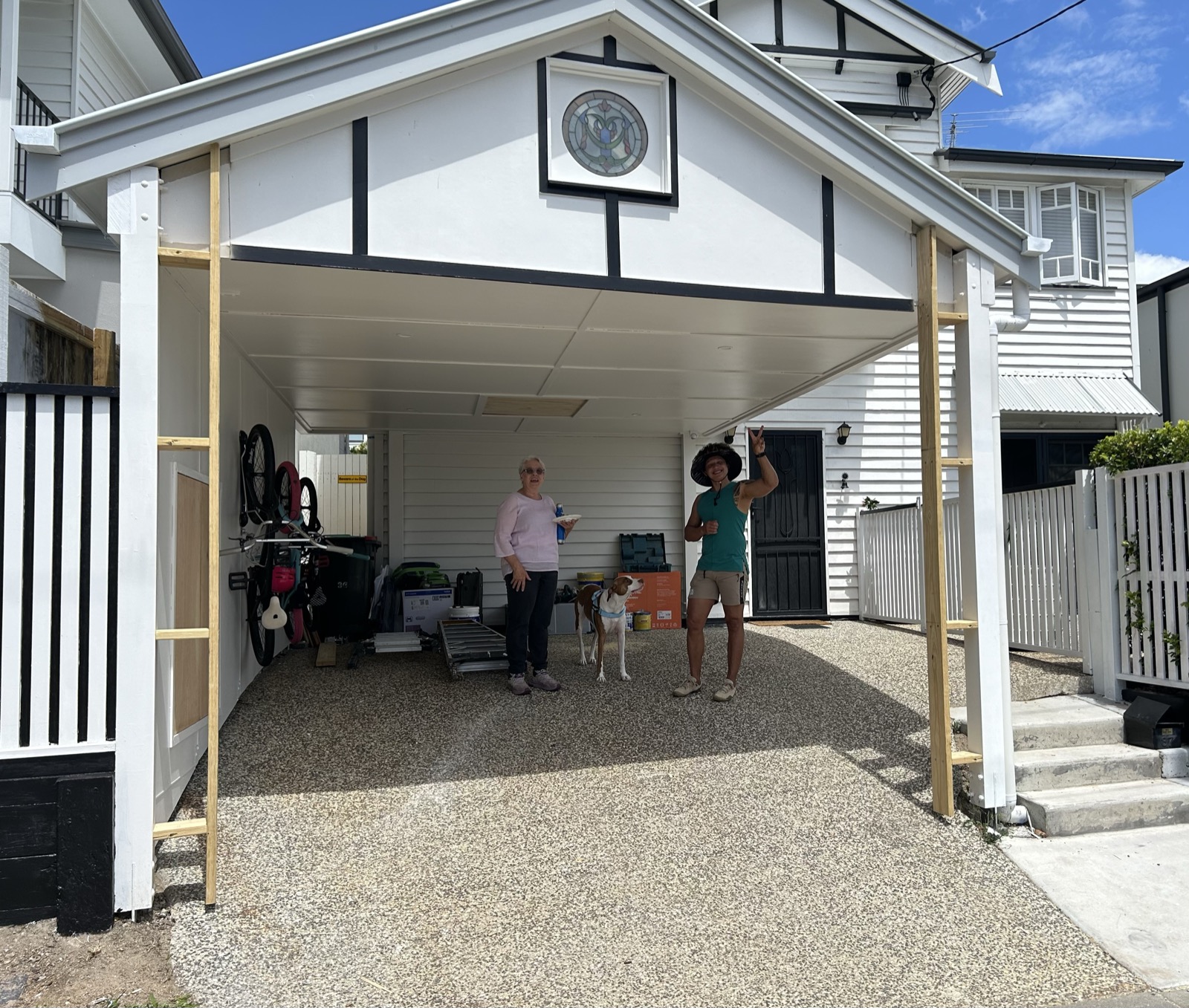
Vinyl plank is one of the most common floor finishes in a Queenslander build-under: it goes over a slab quickly, it is forgiving on minor surface defects and it shrugs off the moisture you sometimes get at slab level even years after the build. The detail that matters is substrate prep and acclimatisation.
What this article covers
Click-lock vinyl plank (also sold as luxury vinyl plank or LVP) installed as a floating floor over a concrete slab. Glue-down vinyl and sheet vinyl follow different rules; the prep is similar, but the installation is not.
Tools and materials
- Vinyl plank (calculate room area plus 10 percent for cuts and waste)
- Underlay (only if specified for your product; many click-lock LVPs have a pre-attached underlay and adding more voids the warranty)
- Tapping block and pull bar
- Rubber mallet
- Utility knife with hook blade (or fine-tooth saw for thicker planks)
- Spacers (8-10 mm, or use offcuts)
- Long straightedge or laser level (for substrate checks)
- Self-levelling compound (only if the slab is out of tolerance)
- Tape measure, pencil, set square
Step 1: Check the substrate
The slab must be dry, clean, flat and structurally sound. Three checks before anything else:
Flatness. Lay a 2 m straightedge across the floor in multiple directions. Most click-lock products specify a maximum deviation of 3 mm over 2 m. Anything worse and the planks will rock, the click joints will fail and you will get visible bounce. Use self-levelling compound on low spots, grind down high spots.
Moisture. New slabs need to cure before vinyl goes over them. Industry guidance is typically 60 days minimum for a residential slab. Test with a moisture meter or tape down a square metre of plastic sheet for 24 hours - condensation under the plastic means the slab is still releasing moisture. Vinyl over a wet slab traps moisture against the underside and the floor will lift or smell within months.
Cleanliness. Sweep, vacuum, then scrape off any plaster, paint, glue or render that landed during construction. Even small hard particles will telegraph through the vinyl as a visible bump.
Step 2: Acclimatise the planks
Bring the boxes into the room they will be laid in, lay them flat and leave them for at least 48 hours. Open the boxes, so the planks see room temperature and humidity.
Vinyl expands and contracts with temperature. Installing cold planks into a warm room (or vice versa) means the floor will expand after installation, push against the walls and either buckle or pop the click joints.
Room conditions should be between 15 and 28 degrees Celsius during installation, with 22 degrees as the ideal. Avoid laying on the hottest day of summer with the doors open.
Step 3: Plan the layout
Measure the room and decide:
- Direction. Planks usually run parallel to the longest wall or in line with the main light source from the largest window. The direction is a design choice, but it affects waste, so plan it before opening the first box.
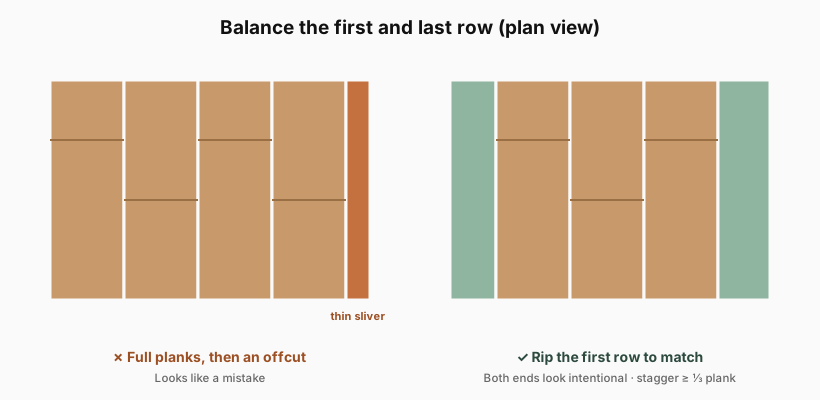
- First row width. Measure the room width, divide by the plank width to find how many full planks fit and what remains. If the last row would end up narrower than a third of a plank, rip the first row to make the last row wider. A 200 mm first row and a 200 mm last row looks intentional; a 200 mm first row and a 30 mm last row looks like a mistake.
- Stagger. Joints in adjacent rows should be offset by at least a third of a plank length, ideally half. Random-looking is best, but planks running in straight diagonal lines (the “stair-step” pattern) look amateurish.
Step 4: Lay the first row
Place 8-10 mm spacers along the starting wall. The floor needs a perimeter expansion gap on all sides, so it can move with temperature changes. The gap will be hidden by skirting boards later.
Click the first row of planks together end-to-end, working into the corner. Cut the last plank to length using a utility knife (score deeply on the wear layer, snap the plank backwards, score the backing, then snap forwards to break it cleanly).
Step 5: Lay subsequent rows
Start each new row with the offcut from the end of the previous row, provided it is longer than the minimum stagger. If the offcut is too short, start with a fresh plank cut to a different length.
Click the long edge into the previous row first, then click the short end into the previous plank in the same row. A tapping block and rubber mallet (light taps, never the mallet directly on the plank edge) closes any stubborn click joints. A pull bar handles the last plank in each row where you cannot get a tapping block behind it.
Step 6: Cut around obstacles
Door frames, pipes and built-in cabinetry need scribed cuts. The cleanest method is a paper template: tape paper to the floor in the position of the plank, mark the obstacle with a pencil, transfer the line to the plank and cut with the utility knife.
For door architraves, undercut the architrave itself rather than scribing the plank - a hand saw lying flat on a scrap of plank gives the right cut height in seconds. The plank then slides under the architrave for a clean finish.
Step 7: Last row
Measure the gap between the second-last row and the wall (minus the spacer). Mark the measurement on a plank, score and snap and click it in. The pull bar engages the last click joint from above where the tapping block cannot reach.
Step 8: Reinstate skirtings and thresholds
Pull spacers, install or reinstate skirting boards (which cover the expansion gap) and fit transition strips at doorways where the vinyl meets a different floor finish.
Common mistakes
No expansion gap. Buckles and lifts within months as the floor expands.
Skipping acclimatisation. Same outcome as no expansion gap, but on a smaller scale: the joints open or pop after the first temperature swing.
Laying over a slab with surface contamination. Crumbs of plaster or paint under vinyl show through as visible bumps and accelerate wear at those points.
Forcing a click joint. Click-lock vinyl engages with a specific motion (angle in, then drop flat). Forcing a joint sideways with a mallet damages the locking edge and the joint will open later.
Choosing the cheapest underlay. If your product specifies an underlay, use the right thickness and density. Too soft and the click joints will fail. Too hard and the floor feels cold and noisy.
Vinyl plank flooring: FAQ
Can I lay vinyl plank directly on the slab without underlay?
If the plank has a pre-attached underlay layer, yes (and you must not add more - it will be too thick and the click joints will flex). If the plank does not have pre-attached underlay, follow the manufacturer's spec. A moisture barrier (plastic film or specified vinyl underlay) is usually required directly on concrete to protect against residual slab moisture.
What is the difference between SPC, WPC and standard vinyl plank?
Stone Plastic Composite (SPC) has a rigid core with limestone, is dimensionally stable and tolerates heat and moisture well. Wood Plastic Composite (WPC) is softer and warmer underfoot, but expands more with temperature. Standard LVP is flexible and conforms to small irregularities in the substrate. For a build-under slab in Brisbane, SPC is usually the most forgiving.
How much waste should I budget for?
10 percent is the rule of thumb for rectangular rooms with simple cuts. For rooms with multiple obstacles (cabinetry, columns, angled walls), budget 15 percent. Open one extra box at the start, so you can colour-match to surrounding planks rather than running out partway through.
Newsletter
Follow the build
One documented Coorparoo project - the costs, the approvals, the calls we would reverse. Lessons that translate, straight to your inbox.